Vol. 3 No. 2 (2024): September
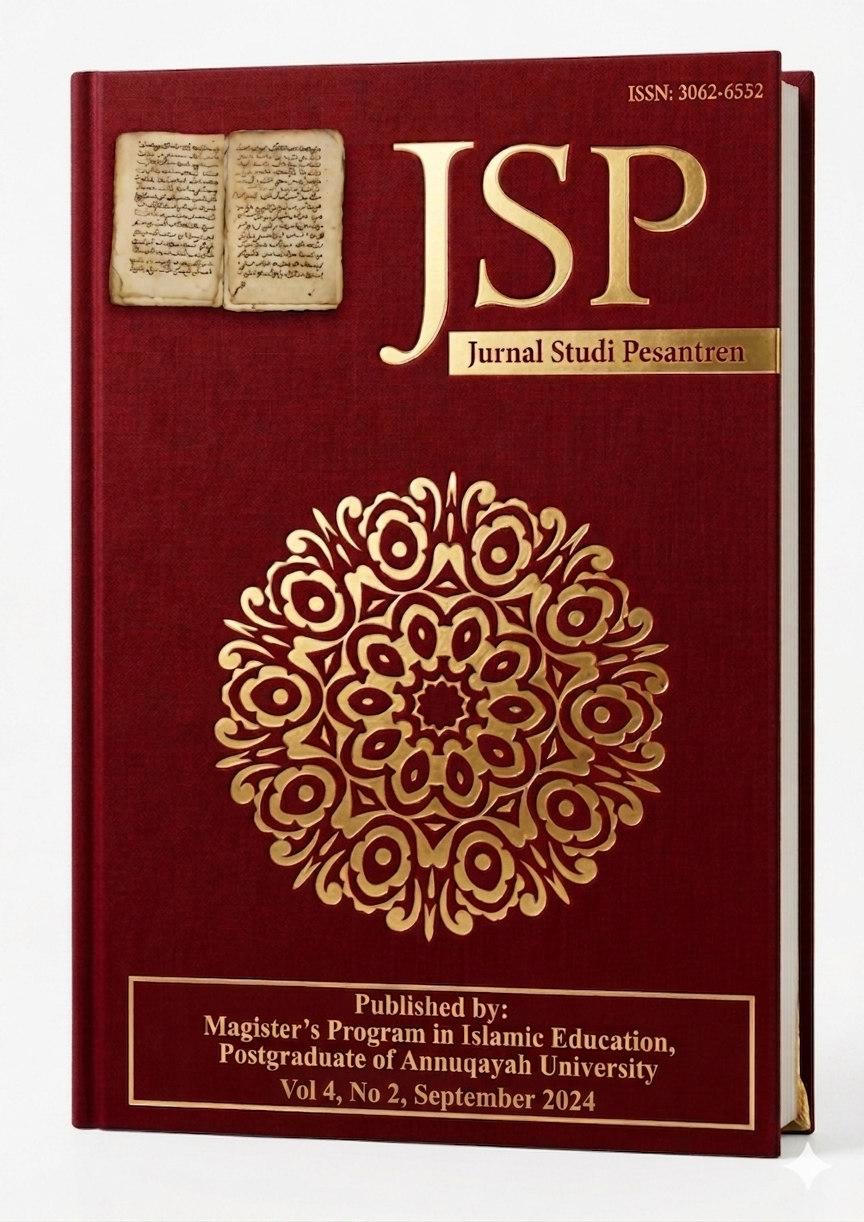
This issue of JSP: Jurnal Studi Pesantren presents a coherent set of studies that map the contemporary intellectual concerns of pesantren scholarship, especially in relation to moral formation, pedagogical innovation, religious identity, and institutional resilience. Across the featured articles, the journal shows how pesantren continue to function as living educational spaces that preserve tradition while responding to changing social realities. The articles in this issue examine six important themes. They address character values in akhlak learning, the ethics of simple living in the age of digital consumerism, the effectiveness of muraajaah-based tahfidz learning, the role of kiai leadership in motivating santri, the preservation of Javanese tradition through religious ritual, and institutional strategies for nurturing student self-awareness. Each study contributes to a broader understanding of how pesantren education works not only as religious instruction but also as a holistic social and cultural formation process. Taken together, the issue highlights a strong balance between continuity and adaptation. The preservation of classical values remains central, yet the articles also show a clear concern for modern educational challenges such as motivation, learning effectiveness, identity negotiation, and the influence of digital culture. This combination reflects the distinctive strength of pesantren studies, where theological commitment, pedagogical practice, and social transformation are always closely connected. The journal also demonstrates scholarly diversity in method and focus. Some articles emphasize moral and spiritual development, while others explore leadership, learning systems, and cultural preservation as strategic dimensions of pesantren life. This variety gives the issue a rich interdisciplinary character and makes it relevant for readers interested in Islamic education, sociology of religion, and pesantren studies. Overall, this JSP issue offers an insightful portrait of pesantren as dynamic institutions that remain rooted in tradition while actively shaping ethical, intellectual, and cultural responses to contemporary change.